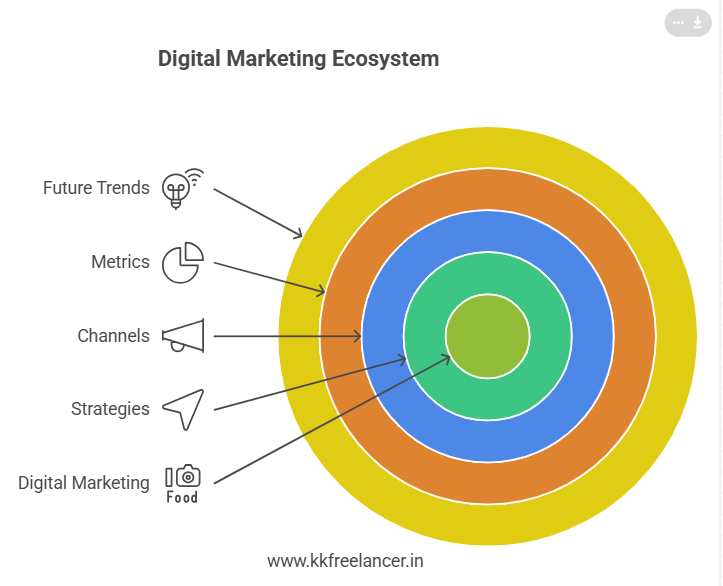

what is digital marketing? In simple words, digital marketing refers to all marketing efforts that use the internet or electronic devices to connect with potential customers. From social media and email campaigns to SEO and paid advertising, digital marketing helps businesses attract, engage, and convert audiences more effectively than ever.
As more than 5.3 billion people use the internet globally (Statista, 2025), companies that fail to establish a strong digital presence risk being left behind. This blog will help you understand the importance of digital marketing, how it works, key channels, performance metrics, and what the future holds for businesses that embrace this evolution.
Importance of Digital Marketing
The rise of digital technology has transformed how consumers interact with brands. Traditional marketing — print, TV, or billboards — still has a place, but digital marketing offers something far more powerful: measurable, targeted, and scalable growth.
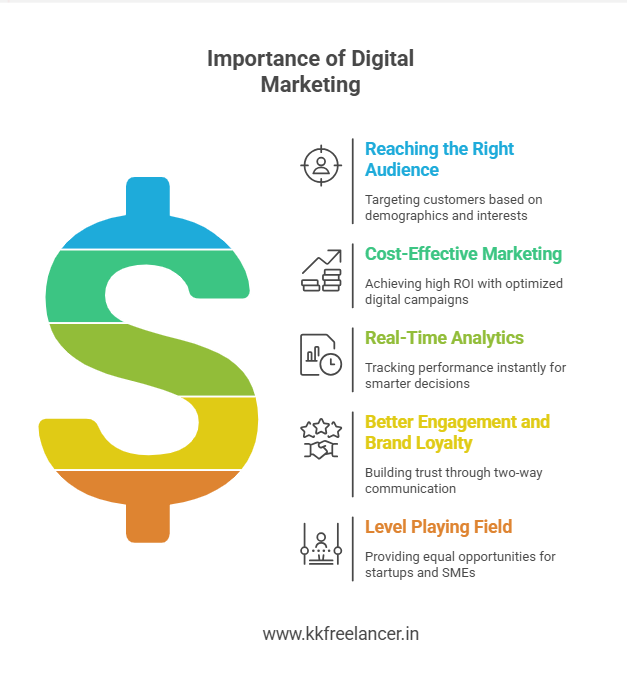
1. Reaching the Right Audience
Digital marketing allows you to segment and target customers based on demographics, location, behavior, and interests. For instance, a local bakery in Pune can run Facebook or Google Ads targeting “cake delivery near me” searches, ensuring the message reaches potential buyers.
2. Cost-Effective Marketing
Compared to print or TV ads, digital channels like SEO, social media, and email marketing offer an exceptional ROI. Even small budgets can deliver big results when campaigns are optimized correctly.
3. Real-Time Analytics
With digital campaigns, you can track performance instantly. Tools like Google Analytics and Meta Ads Manager provide live data — clicks, impressions, conversions — enabling smarter decisions and better optimization.
4. Better Engagement and Brand Loyalty
Digital marketing opens two-way communication between you and your customers. Through social media comments, chatbots, and personalized emails, brands build trust and long-term relationships.
5. Level Playing Field
Unlike traditional marketing, digital marketing gives startups and SMEs a fair chance to compete with larger brands through creativity and smart targeting.
Table: Traditional Marketing vs Digital Marketing
| Feature | Traditional Marketing | Digital Marketing |
|---|---|---|
| Medium | Print, TV, Radio | Internet, Social Media, Search Engines |
| Targeting | Broad Audience | Highly Targeted |
| Cost | Expensive | Cost-Effective |
| Analytics | Difficult to Measure | Real-Time Tracking |
| Engagement | One-Way Communication | Two-Way Interaction |
How Does Digital Marketing Work?
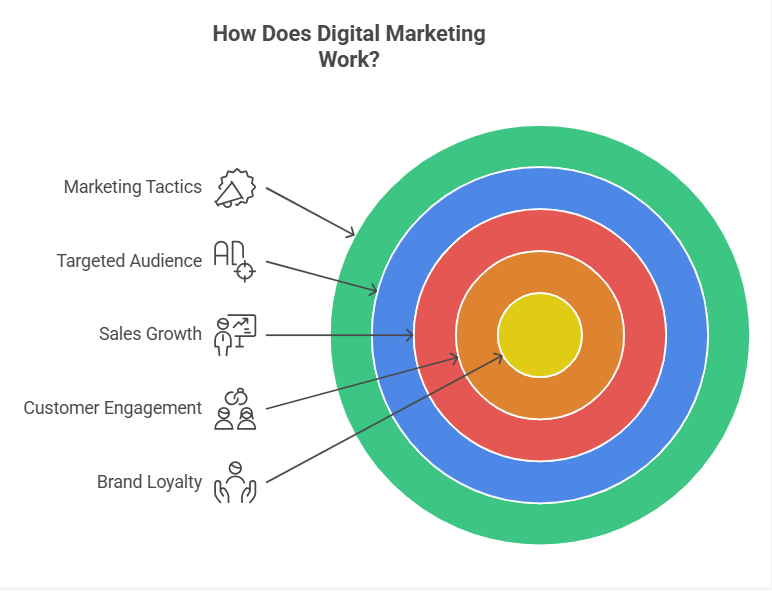
At its core, digital marketing works by connecting your brand with potential customers online — at the right place, at the right time, with the right message. It combines data, creativity, and strategy to generate leads and conversions.
Here’s a simplified breakdown of the process:
- Audience Research: Understanding who your ideal customers are (age, interests, location, etc.).
- Platform Selection: Choosing where they spend time — Google, Facebook, Instagram, LinkedIn, or YouTube.
- Content Creation: Producing relevant and engaging content (blogs, ads, videos, infographics).
- Campaign Execution: Running and managing ads or organic strategies to reach your target audience.
- Tracking & Optimization: Measuring performance through KPIs and adjusting strategies for better ROI.
A robust Digital Marketing Frameworks ensures all these steps work seamlessly together. Businesses can adopt Digital Marketing Models such as Mukesh marketing model, AIDA (Attention, Interest, Desire, Action) or the RACE Framework (Reach, Act, Convert, Engage) to streamline their efforts.
Various Digital Marketing Channels
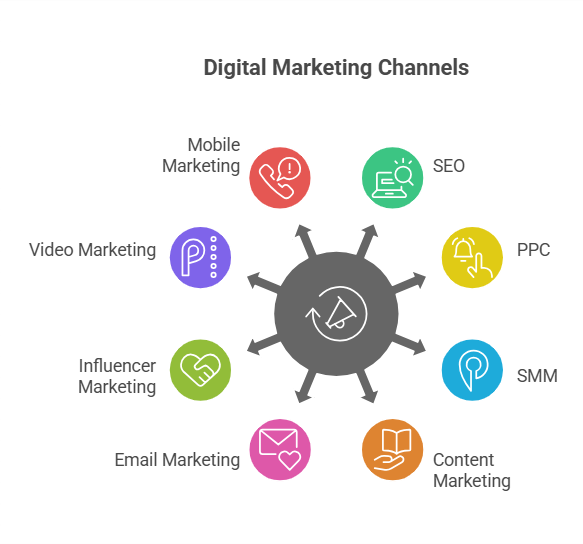
Digital marketing isn’t one thing — it’s a collection of powerful channels working together to grow your brand. Let’s explore the most important ones:
1. Search Engine Optimization (SEO)
SEO is the process of improving your website’s visibility on Google and other search engines. When done right, it drives organic (free) traffic.
Key Elements:
- Keyword Research
- On-page Optimization
- Quality Content
- Link Building
- Technical SEO
Example: KKFreelancer’s SEO Services help businesses rank higher and attract quality leads.
2. Pay-Per-Click Advertising (PPC)
PPC campaigns, like Google Ads, allow you to pay only when users click your ad. It delivers instant visibility and measurable results.
Best For:
- New businesses wanting quick traffic
- Promoting offers, events, or launches
3. Social Media Marketing (SMM)
Platforms like Facebook, Instagram, LinkedIn, and Twitter are powerful tools to build brand awareness, engage audiences, and drive traffic.
Tips:
- Create visually engaging posts
- Use storytelling to humanize your brand
- Leverage paid social ads for reach
You can explore our SMO Services to amplify your brand presence.
4. Content Marketing
Content is the backbone of every digital strategy. Blogs, videos, eBooks, and infographics help educate and nurture your audience.
Example Framework:
- Educate – Explain how your product solves problems.
- Engage – Tell stories.
- Convert – Offer CTA-based content (e.g., “Book a Consultation”).
KKFreelancer’s Blog Page offers many such resources to help you learn and apply digital marketing strategies.
5. Email Marketing
Despite being one of the oldest channels, email marketing remains a top performer. Personalized email sequences can boost conversion rates by up to 400% (Campaign Monitor, 2024).
Pro Tip: Use automation to send welcome emails, cart reminders, and loyalty campaigns.
6. Influencer & Affiliate Marketing
Partnering with influencers or affiliates can help you tap into trusted communities and expand your reach organically.
7. Video Marketing
With platforms like YouTube and Instagram Reels dominating, video content builds engagement and trust faster than text alone.
8. Mobile Marketing
From SMS campaigns to in-app ads, mobile marketing ensures your brand reaches consumers directly on their most used device — the smartphone.
Key Performance Indicators (KPIs) in Digital Marketing
To know whether your campaigns are successful, you must track the right Key Performance Indicators (KPIs). These metrics vary based on your goals — awareness, engagement, or sales.
| Objective | KPI | Description |
|---|---|---|
| Website Traffic | Sessions, Page Views | Measures overall site visits |
| Lead Generation | Conversion Rate | Percentage of users who take desired action |
| Brand Awareness | Impressions, Reach | How many people saw your content |
| Engagement | CTR, Likes, Comments | Indicates audience interaction |
| ROI | Cost per Lead, ROAS | Evaluates profitability of campaigns |
Pro Tip: Focus on quality leads, not just volume. High engagement with low conversions indicates poor targeting or content mismatch.
Use of Digital Marketing for Business
Every business — big or small — can benefit from a strategic digital presence. Here’s how digital marketing empowers companies:
1. Local Businesses
Local SEO helps small stores appear in “near me” searches. Example: “best movers in Pune” could lead to Urban Relocation Packers & Movers — a real-life example of local digital success.
2. Startups
Startups can leverage social media and PPC to build brand awareness quickly with minimal budget.
3. E-commerce Brands
Email automation, Google Shopping Ads, and retargeting boost repeat purchases.
4. B2B Companies
LinkedIn Ads and SEO-driven blogs build authority and generate qualified B2B leads.
5. Service Providers
Digital marketing enhances visibility, builds trust, and drives inquiries through consistent online branding — just like how KKFreelancer helps brands grow digitally.
Future of Digital Marketing
The future of digital marketing is dynamic, data-driven, and personalized. Emerging technologies like AI, machine learning, and voice search are redefining how brands communicate.
1. AI and Automation
AI tools analyze vast data sets to personalize content and automate repetitive tasks. AI-driven chatbots improve response time and customer satisfaction.
2. Voice Search Optimization
By 2026, over 60% of searches are expected to be voice-based. Optimizing for conversational keywords is essential.
3. Video and Interactive Content
Interactive videos, polls, and AR experiences will dominate digital engagement strategies.
4. Privacy and Data Protection
With increasing data regulations (like GDPR), ethical marketing and transparency will be vital.
5. The Rise of First-Party Data
Brands will rely more on their own data sources rather than third-party cookies to target and understand audiences effectively.
Conclusion: Transform Your Business with Digital Marketing
To sum up, digital marketing is more than just an online presence — it’s the foundation of sustainable business growth in today’s competitive era. From SEO to social media, from email to automation, every channel offers an opportunity to attract, engage, and convert customers efficiently.
If you’re ready to harness the power of digital marketing for your brand, partner with KKFreelancer — India’s trusted digital marketing agency helping businesses achieve measurable success.
👉 Contact KKFreelancer today to start your digital transformation journey.
FAQS
The main types include SEO, PPC, social media marketing, email marketing, content marketing, affiliate marketing, and influencer marketing.
It helps small businesses reach targeted audiences, improve visibility, and generate sales with cost-effective strategies.
Popular tools include Google Analytics, Ahrefs, SEMrush, HubSpot, and Mailchimp.
Success is measured through KPIs like website traffic, conversion rate, engagement rate, and ROI.
The future will revolve around AI-driven personalization, voice search optimization, and data privacy-focused strategies.