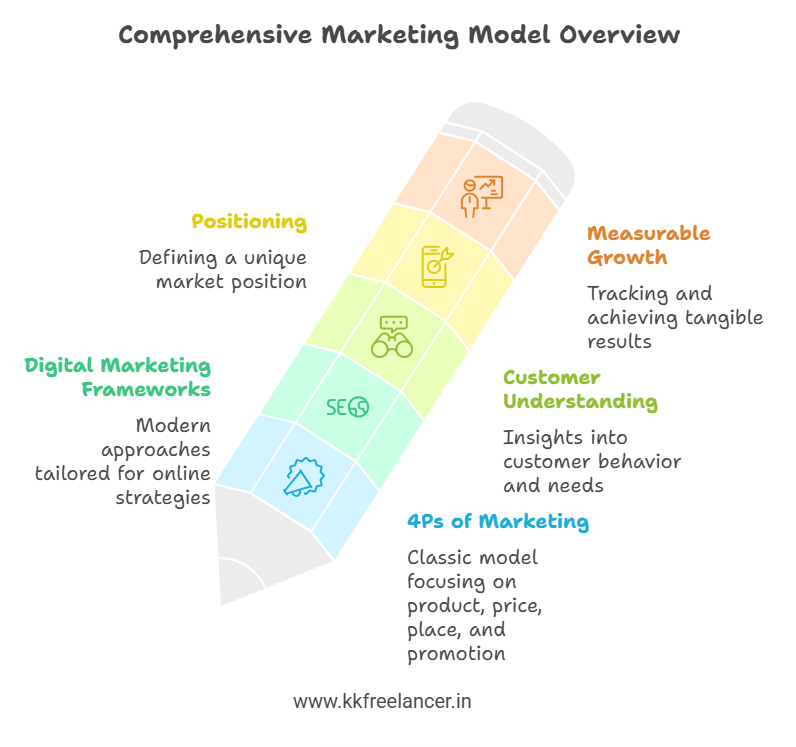

Marketing models are frameworks that help businesses plan, execute, and evaluate their strategies effectively. From classic models like the 4Ps of Marketing to modern digital marketing frameworks, these tools help marketers understand customers, define positioning, and drive measurable growth.
At kkfreelancer.in, we help businesses across India use proven marketing models to optimize campaigns, boost conversions, and achieve real results.
Let’s explore all major marketing models — both traditional and digital — that shape successful marketing strategies today.
What Are Marketing Models?
A marketing model is a structured approach used to analyze how different factors influence consumer behavior and business outcomes. It simplifies complex marketing processes into manageable steps, helping teams make data-driven decisions.
Why Marketing Models Are Important
- Provide clarity: They simplify complex marketing activities.
- Guide strategy: Ensure campaigns align with business goals.
- Measure effectiveness: Help track performance using KPIs.
- Enable consistency: Create a unified direction for all marketing activities.
- Support decision-making: Back strategies with proven frameworks.
1. Traditional Marketing Models
Before the digital era, traditional marketing models laid the foundation for modern marketing strategy. Let’s start with the most influential ones.
1.1 The 4Ps of Marketing (Marketing Mix)
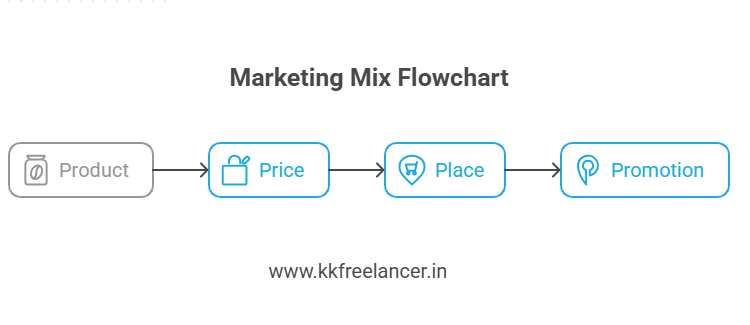
Perhaps the most famous model in marketing, the 4Ps (Product, Price, Place, Promotion) were introduced by E. Jerome McCarthy in the 1960s.
| Element | Description | Example |
|---|---|---|
| Product | What you’re selling – goods or services | A premium coffee blend |
| Price | The value customers are willing to pay | ₹500 for 1kg |
| Place | Where the product is available | Online store & retail outlets |
| Promotion | How you inform and attract customers | Social media ads, print, influencer marketing |
Why it matters:
The 4Ps model ensures businesses create balanced strategies that address product quality, pricing strategy, distribution, and promotion together.
1.2 The 7Ps of Marketing
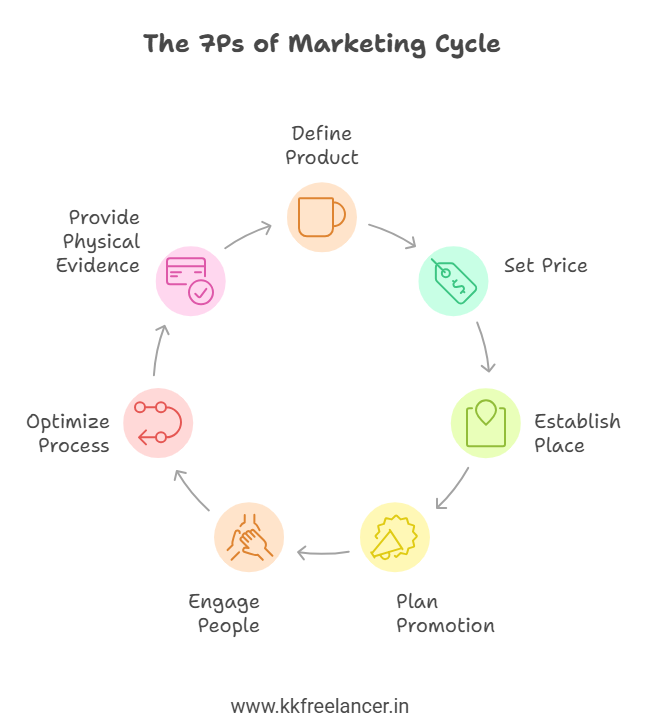
As services became a larger part of the economy, three more elements were added to the original mix: People, Process, Physical Evidence.
| Element | Description |
|---|---|
| People | Employees, customers, and stakeholders involved in service delivery. |
| Process | The steps through which a product or service is delivered. |
| Physical Evidence | Tangible proof that a service was provided (e.g., receipts, website interface). |
Use Case:
The 7Ps model is widely applied in service industries like hospitality, healthcare, and education — and is a powerful framework for evaluating marketing effectiveness.
1.3 The AIDA Model
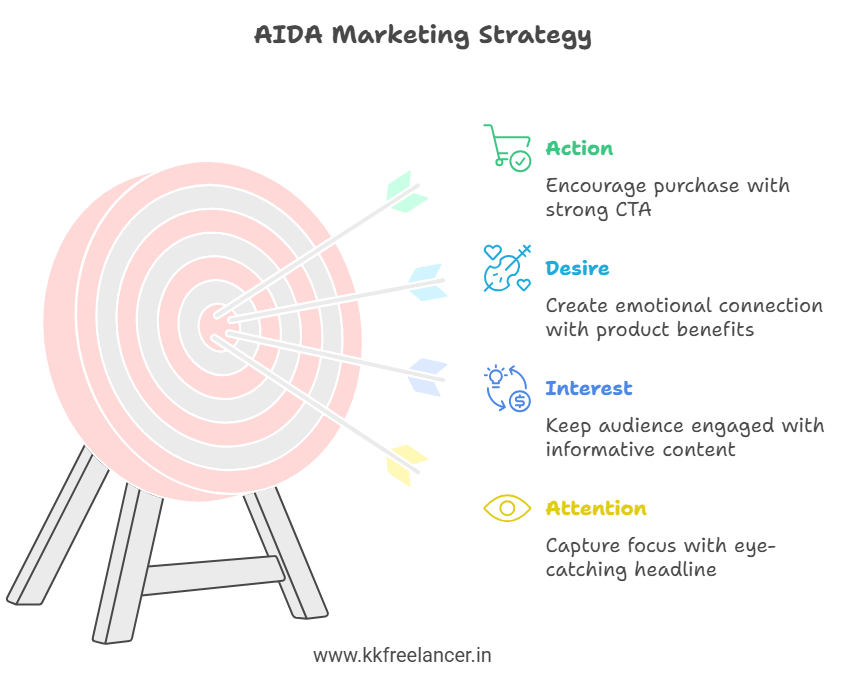
AIDA stands for Attention, Interest, Desire, and Action — a classic model that maps the customer journey from awareness to purchase.
| Stage | Goal | Example |
|---|---|---|
| Attention | Capture the audience’s focus | Eye-catching ad headline |
| Interest | Keep them engaged | Informative video or content |
| Desire | Create emotional connection | Showing product benefits |
| Action | Encourage purchase | Strong CTA, “Buy Now” button |
Pro Tip:
AIDA is especially useful for ad copy, landing pages, and sales funnels.
1.4 The STP Model (Segmentation, Targeting, Positioning)
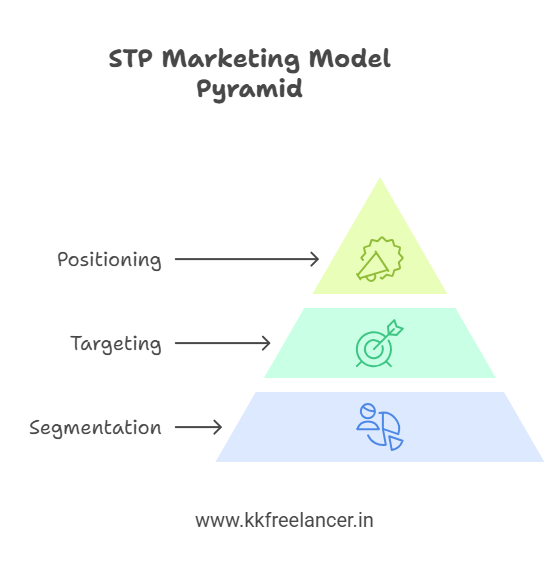
The STP model helps businesses define their audience and position their brand effectively.
- Segmentation: Divide the market into smaller segments based on demographics, behavior, or geography.
- Targeting: Choose the most valuable segment to focus on.
- Positioning: Craft a clear message to differentiate your brand in the minds of consumers.
Example:
A skincare brand may segment customers by skin type, target those with sensitive skin, and position itself as the most natural solution.
1.5 SWOT Analysis
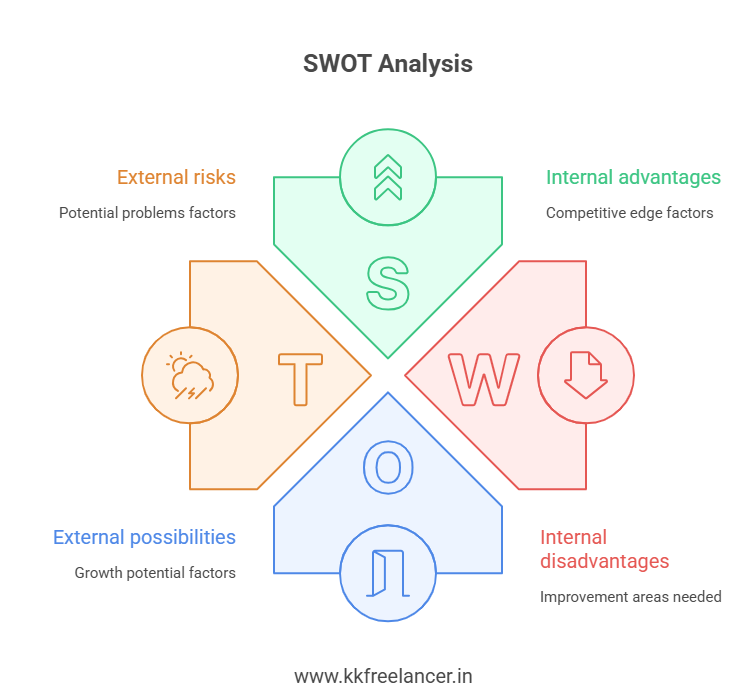
SWOT stands for Strengths, Weaknesses, Opportunities, and Threats — a model for strategic assessment.
| Internal Factors | External Factors |
|---|---|
| Strengths | Opportunities |
| Weaknesses | Threats |
Usage Tip:
Before launching a marketing campaign, perform a SWOT analysis to identify where your business stands competitively.
1.6 Porter’s Five Forces Model
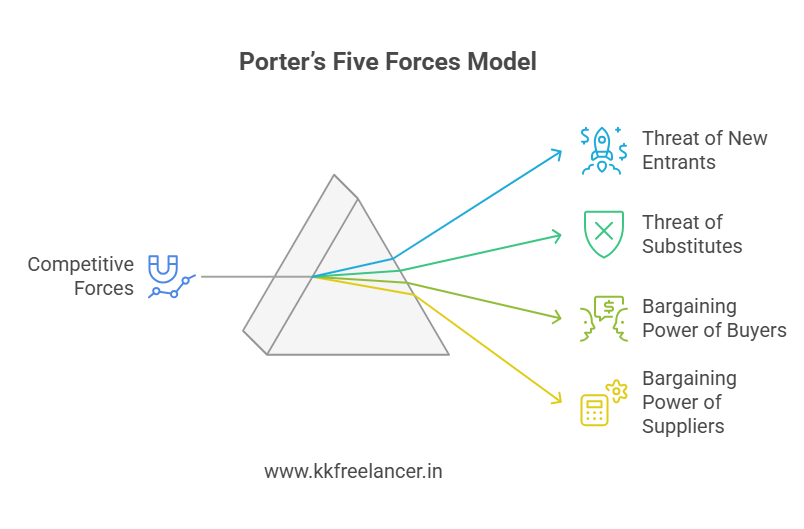
Michael Porter’s model helps evaluate the competitive landscape:
- Competitive Rivalry
- Threat of New Entrants
- Threat of Substitutes
- Bargaining Power of Buyers
- Bargaining Power of Suppliers
This model is widely used for market entry strategy and identifying external pressures that influence pricing and growth.
2. Modern and Digital Marketing Models
Now let’s move into the era of digital transformation. Modern marketers use digital marketing models that are agile, data-driven, and customer-focused.
2.1 The RACE Framework
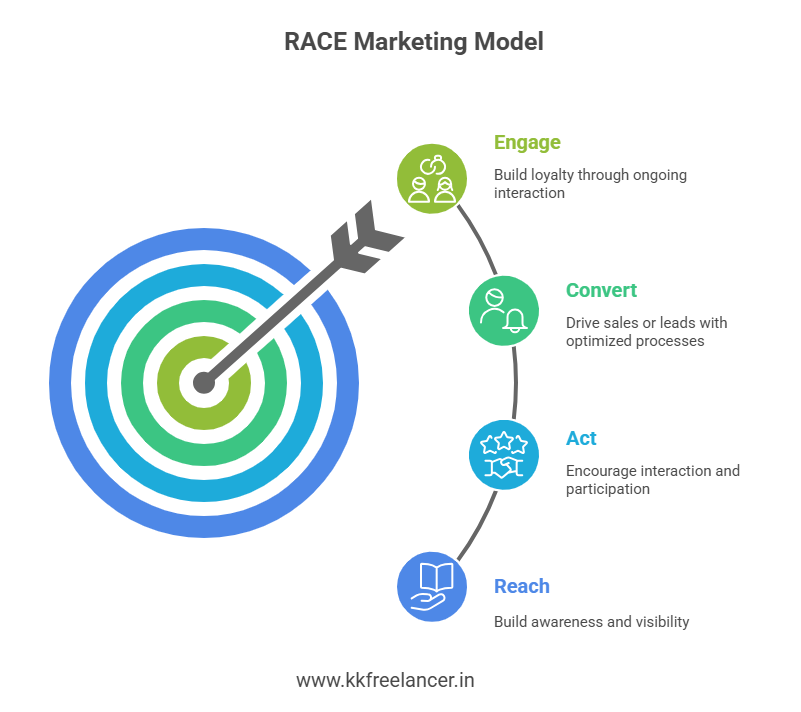
Developed by Smart Insights, RACE stands for Reach, Act, Convert, Engage.
| Stage | Objective | Example |
|---|---|---|
| Reach | Build awareness | SEO, Paid Ads, Social Media |
| Act | Encourage interaction | Blog comments, video views |
| Convert | Drive sales or leads | Landing pages, checkout optimization |
| Engage | Build loyalty | Email campaigns, retargeting ads |
Why It Works:
RACE provides a full-funnel digital marketing structure — perfect for tracking ROI and long-term engagement.
2.2 The SOSTAC Model
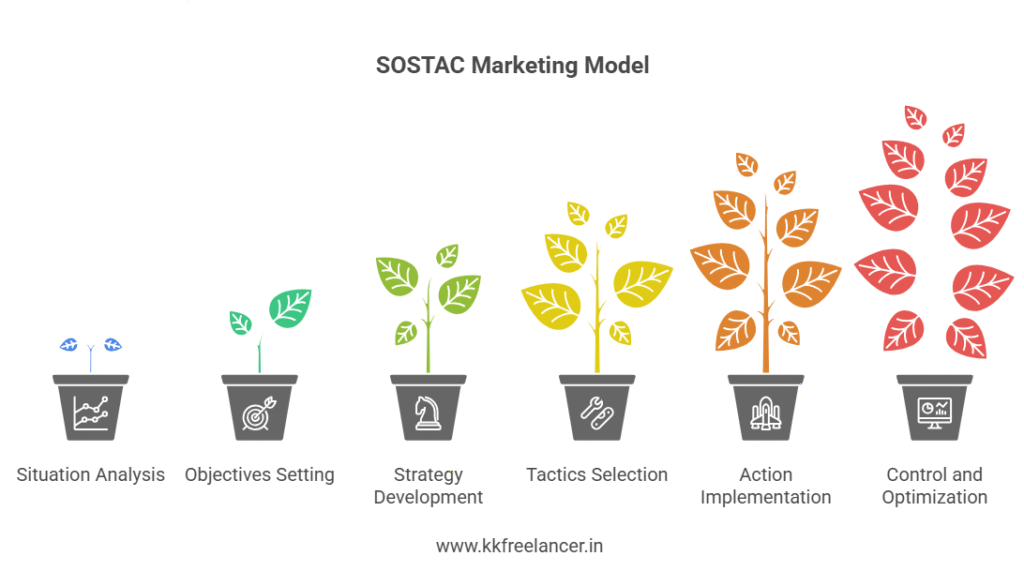
Created by PR Smith, the SOSTAC model stands for Situation, Objectives, Strategy, Tactics, Action, Control.
| Step | Description |
|---|---|
| Situation | Where are we now? (Market analysis) |
| Objectives | Where do we want to be? (Goals) |
| Strategy | How to get there? (Approach) |
| Tactics | Which tools to use? (Channels, content, ads) |
| Action | Implementation plan |
| Control | Measure, monitor, optimize |
Pro Tip:
SOSTAC integrates perfectly with digital marketing frameworks like RACE for online campaign planning.
2.3 The Flywheel Model
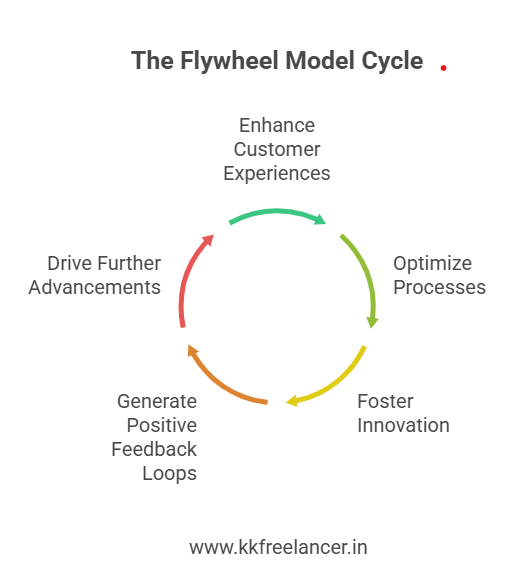
Popularized by HubSpot, the Flywheel emphasizes customer experience over a linear funnel.
| Stage | Focus |
|---|---|
| Attract | Draw in the right audience |
| Engage | Build trust and solve problems |
| Delight | Deliver experiences that turn customers into promoters |
Why Businesses Love It:
Unlike traditional funnels, the Flywheel uses momentum from satisfied customers to drive referrals and repeat sales.
2.4 The 5A Model (Philip Kotler)
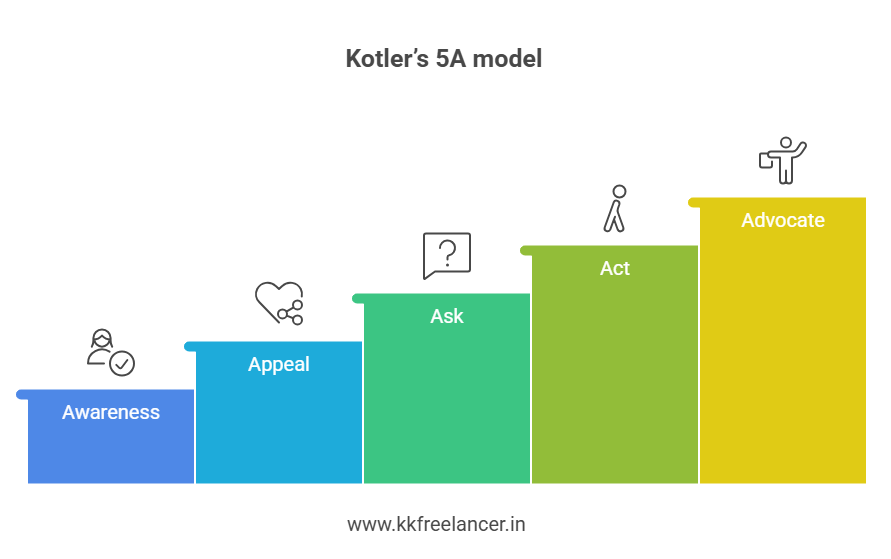
Kotler’s 5A model explains how digital consumers behave: Aware, Appeal, Ask, Act, Advocate.
Example:
A user sees your ad (Aware), likes it (Appeal), researches your brand (Ask), purchases (Act), and recommends it (Advocate).
This model perfectly aligns with today’s omnichannel marketing environment.
2.5 The 70:20:10 Model
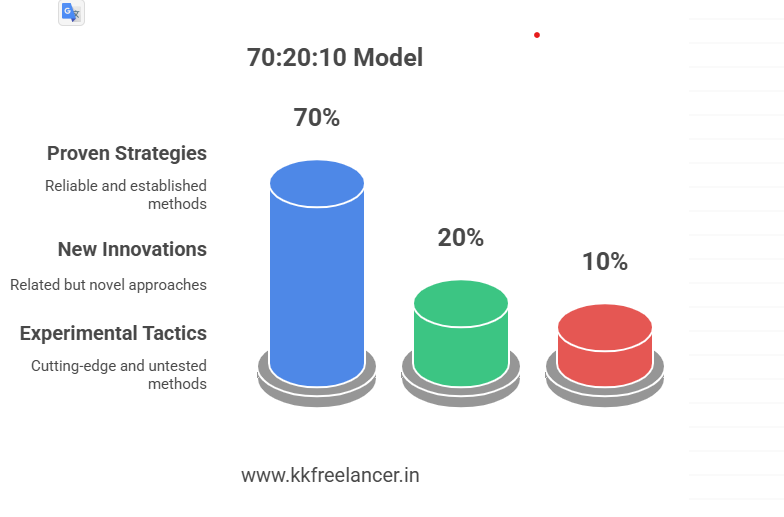
This model helps allocate marketing resources effectively:
- 70% on proven, reliable strategies
- 20% on new but related innovations
- 10% on experimental or cutting-edge tactics
It’s widely used by digital agencies to balance performance and innovation.
2.6 The AARRR Funnel (Pirate Metrics)
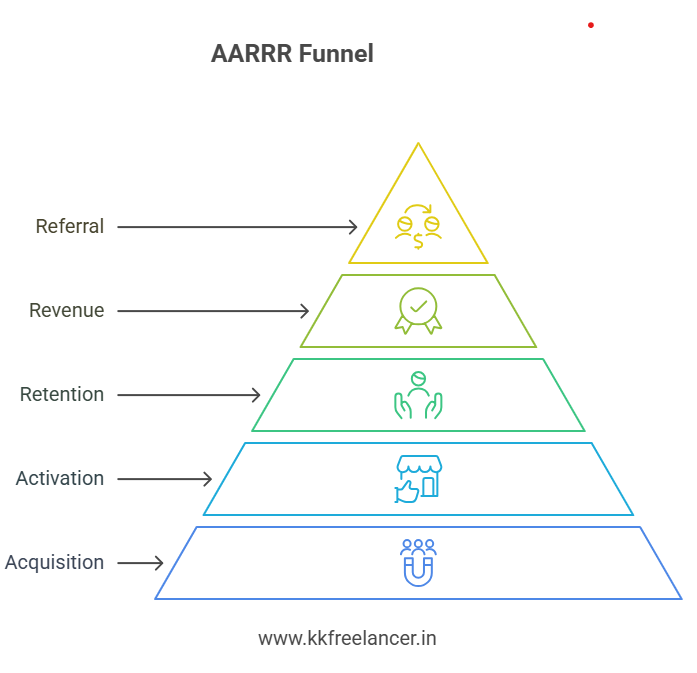
Used in digital startups and SaaS, AARRR stands for:
- Acquisition
- Activation
- Retention
- Revenue
- Referral
Each stage helps measure key customer lifecycle metrics and optimize growth
Mukesh Marketing Model (M3)
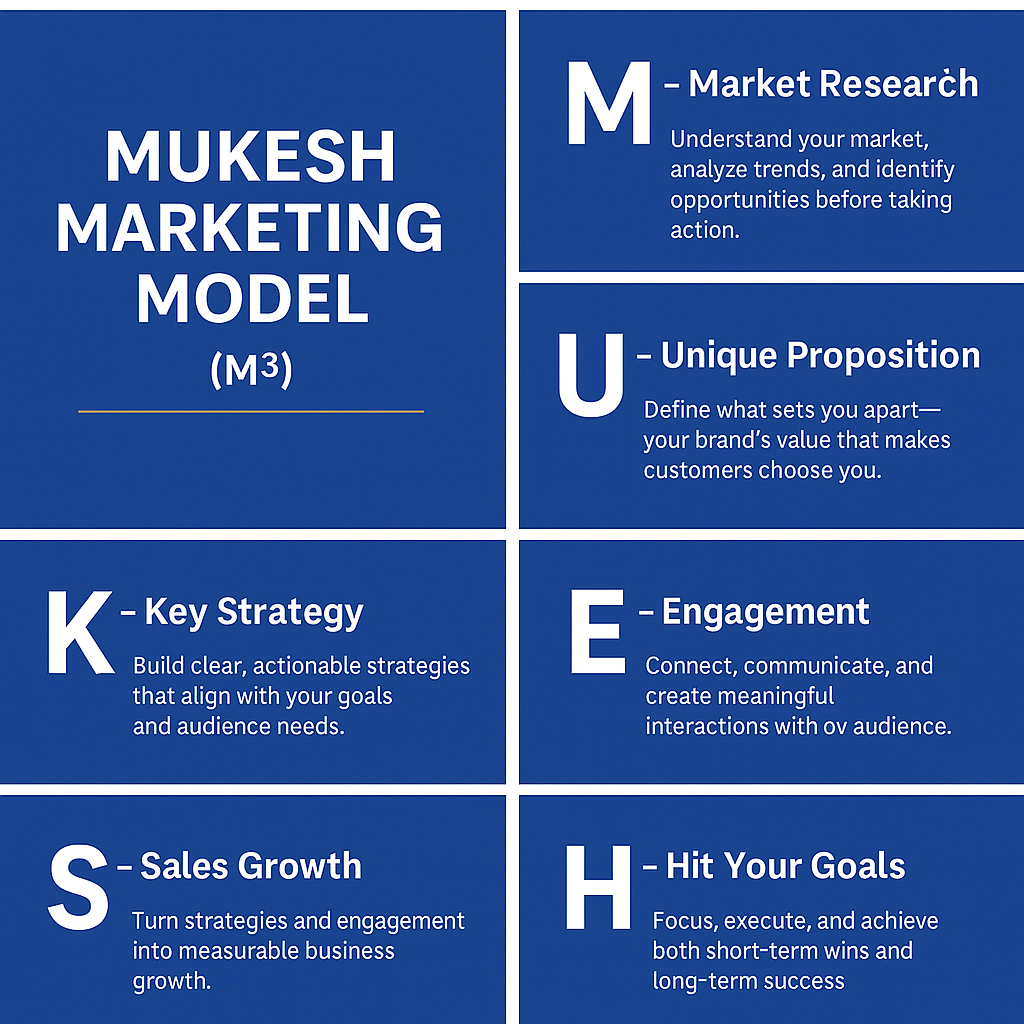
To bring clarity and structure into
modern marketing, Mukesh Pareek, a digital marketing professional, introduced the Mukesh Marketing Model (M3) — a step-by-step blueprint designed to help businesses simplify, strategize, and scale their marketing efforts effectively. Unveiled on October 16, 2025, this model provides a complete roadmap for achieving sustainable growth using six powerful pillars represented by the name MUKESH.
𝐌 – 𝐌𝐚𝐫𝐤𝐞𝐭 𝐑𝐞𝐬𝐞𝐚𝐫𝐜𝐡 🔍 Understand your market, analyze trends, and identify opportunities before taking action.
𝐔 – 𝐔𝐧𝐢𝐪𝐮𝐞 𝐏𝐫𝐨𝐩𝐨𝐬𝐢𝐭𝐢𝐨𝐧 💡 Define what sets you apart — your brand’s value that makes customers choose you.
𝐊 – 𝐊𝐞𝐲 𝐒𝐭𝐫𝐚𝐭𝐞𝐠𝐲 🎯 Build clear, actionable strategies that align with your goals and audience needs.
𝐄 – 𝐄𝐧𝐠𝐚𝐠𝐞𝐦𝐞𝐧𝐭 🤝 Connect, communicate, and create meaningful interactions with your audience.
𝐒 – 𝐒𝐚𝐥𝐞𝐬 𝐆𝐫𝐨𝐰𝐭𝐡 📈 Turn strategies and engagement into measurable business growth.
𝐇 – 𝐇𝐢𝐭 𝐘𝐨𝐮𝐫 𝐆𝐨𝐚𝐥𝐬 🏆 Focus, execute, and achieve both short-term wins and long-term success. 💬 “Marketing isn’t just about selling products — it’s about creating value, building relationships, and driving growth.”
3. Comparing Traditional vs Digital Marketing Models
| Aspect | Traditional Models | Digital Models |
|---|---|---|
| Focus | Product & Market | Customer & Experience |
| Data Source | Surveys, Sales Reports | Analytics, Real-time Data |
| Approach | Linear | Iterative & Dynamic |
| Examples | 4Ps, AIDA, STP | RACE, SOSTAC, Flywheel |
| Key Metric | Awareness & Sales | Engagement, Conversion, Retention |
4. How to Choose the Right Marketing Model for Your Business
Every business is unique — the right model depends on your goals, audience, and resources.
Step-by-Step Approach
- Define your objective: Awareness, conversion, or retention?
- Analyze your audience: Use STP for segmentation.
- Select a framework: Combine traditional and digital models.
- Track KPIs: Use tools like Google Analytics, HubSpot, or CRM dashboards.
- Optimize continuously: Apply learnings to improve campaigns.
5. Real-World Example: Integrating Models for Success
Imagine a mid-sized eCommerce brand:
- Uses STP to target young professionals.
- Applies RACE to plan digital campaigns.
- Implements AIDA in ad copywriting.
- Measures results using AARRR metrics.
The result? A data-backed, customer-centric strategy that scales growth efficiently.
6. Actionable Tips for Marketers
- Combine 1–2 models instead of relying on one.
- Use SOSTAC + RACE for full-funnel digital strategy.
- Apply AIDA in content writing and ads.
- Conduct SWOT quarterly for strategic direction.
- Focus on customer retention (Flywheel model).
Conclusion: Turn Marketing Theory into Action
Marketing models aren’t just academic — they’re practical tools that can transform how your business attracts and retains customers. From the 4Ps to modern RACE and SOSTAC, these frameworks help marketers navigate complexity with confidence.
At kkfreelancer.in, we specialize in building results-driven marketing strategies based on proven frameworks.
Whether you’re looking for SEO, Google Ads, or social media marketing, our team can help you choose and apply the right model to achieve measurable success.
👉 Get in touch today and let’s build a smarter marketing system for your business!
Faqs
Marketing models simplify complex marketing processes, helping businesses plan, execute, and measure campaigns effectively.
Startups can use AARRR and SOSTAC for flexible, scalable strategies that focus on growth and optimization.
Traditional models focus on product and pricing, while digital models emphasize customer experience, data analytics, and engagement.
Yes, combining models like STP, AIDA, and RACE provides a comprehensive roadmap from targeting to conversion.
You can explore expert insights and practical guides on kkfreelancer’s blog page — your go-to resource for marketing education and strategy development.